

Free Will and the Brain: Who Decides First?
We prefer to believe that we are in control. But what if the feeling of choosing is not the beginning of a decision but its aftereffect?
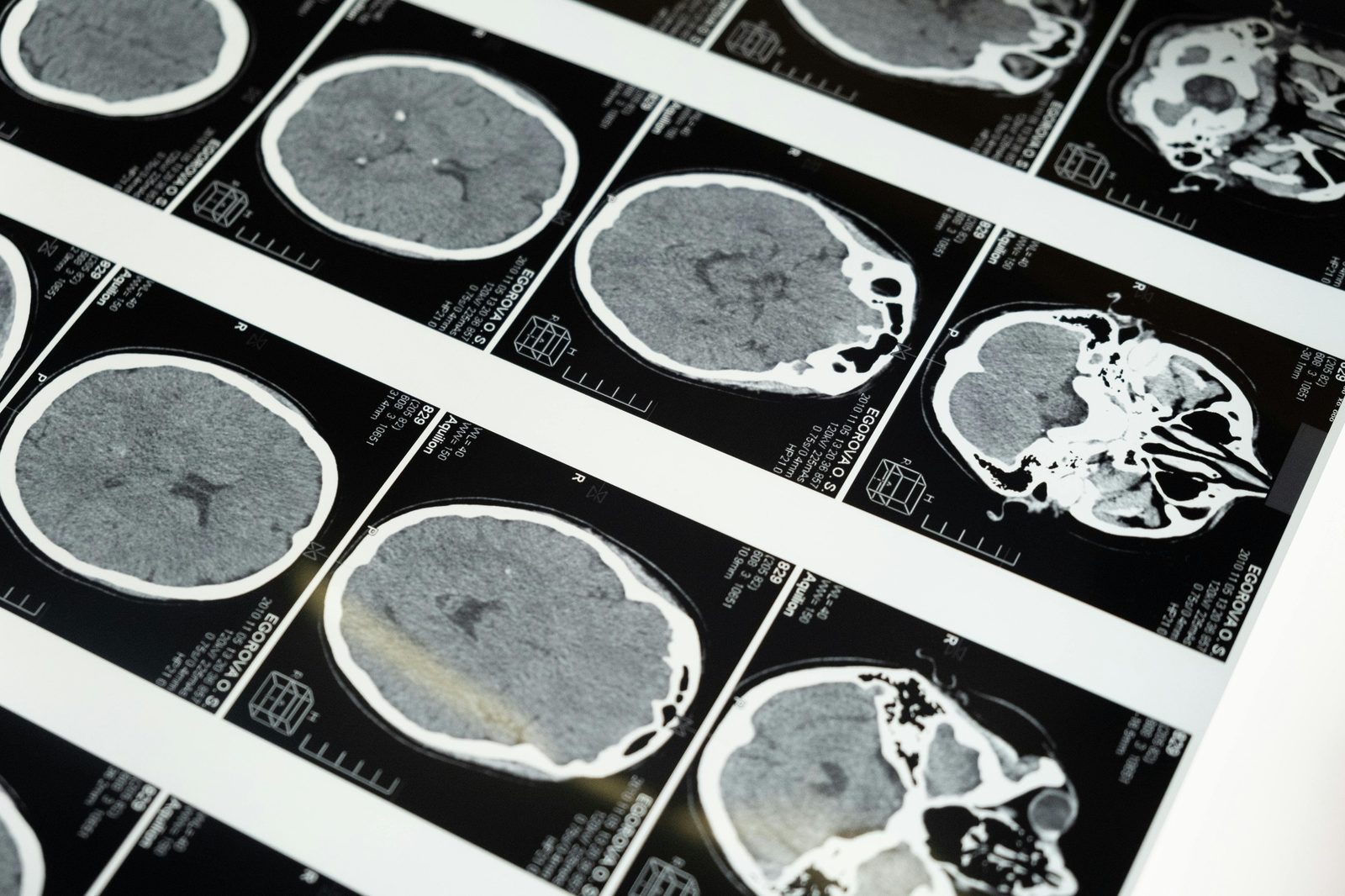
Introduction: The Illusion of Control
We prefer to believe that we are in control. When you choose coffee over tea or decide which task to start first, the experience feels deliberate as though your conscious mind is clearly leading the decision.
This sense of ownership of our actions forms the foundation of how we understand ourselves as autonomous agents.
Neuroscience complicates this intuition. What if the feeling of choosing is not the beginning of a decision but its aftereffect?
This tension lies at the heart of free will and the brain: the unsettling possibility that neural processes may initiate our actions before we become consciously aware of "deciding" at all. This question has profound implications for moral responsibility, legal culpability, and our fundamental understanding of human agency.
The Libet Experiment: A Turning Point in Neuroscience
The question was cut into a sharp focus with an experiment that became famous in 1983 by Benjamin Libet. Participants were asked to perform a simple voluntary action, flexing their wrist, whenever they felt the urge to do so.
While the task itself was trivial, what made the experiment groundbreaking was the methodology. Libet used electroencephalography (EEG) to measure the brain activity of the participants, which involves recording the electrical signal created by neurons firing in the brain.
Participants also watched a rapidly rotating clock and were instructed to note the precise moment they became aware of their intention to move. This enabled Libet to contrast three critical time points including when brain activity started, when conscious intention was formed and when actual movement took place.
The results were striking. Libet discovered a pattern of brain activity called the readiness potential (Bereitschaftspotential), which appeared approximately 550 milliseconds before the actual movement.
More controversially, this neural activity preceded the reported moment of conscious intention by roughly 200 milliseconds. That is, the brain seemed to make a decision prior to the individual being conscious of the decision being made.

Figure 1.** EEG recordings showing the readiness potential that appears before conscious intention in Libet's classic experiment.
Image source: ResearchGate. Licensed under CC BY-SA 4.
0.
Such a discovery is usually understood as the negation of free will and the brain's role in conscious decision-making. Nevertheless, such a conclusion may be premature.
Critics argue, the readiness potential may indicate an overall condition of motor preparation and not a settled decision. Even Libet himself proposed the presence of conscious veto, wherein awareness can not create an action, but can suppress it prior to taking action.
Even so, free will and the brain confronts us with a challenging insight: our sense of agency may involve interpretation as much as control. Consciousness does not necessarily need to be the agent of our actions, but rather a storyteller, constructing a coherent account of decisions whose neural foundations were laid earlier.

Figure 2.** Timeline showing the relationship between readiness potential, conscious intention, and actual movement.
Image source: ResearchGate. Licensed under CC BY 3.
0.
In addition to Libet: Modern Neuroscience Deepens the Challenge
This issue has since been intensified in further studies to highlight our perception of free will and the brain. Neuroscientist John-Dylan Haynes and others demonstrated that the patterns of brain activity could predict the decision made by the participants several seconds before the individuals made conscious decisions.
Researchers were able to read the brains of a participant in the frontopolar cortex using functional magnetic resonance imaging (fMRI) of two buttons pressed by the participant up to seven seconds before the conscious decision. Seven seconds are a short time, but in the brain context, this is a considerable time.
These results indicate that our perception of conscious choice can be in part thematic to what our brain is interpreting in the process of making choices.
Reducing responsibility through Neuroscience
The implications of free will and the brain extend beyond the laboratory and into the legal system. The present justice systems are based on the premise that people are free to make their choices and, thus, can be accountable to them.
Guilt, punishment, and rehabilitation are based on this. Neuroscience, however, brings in evidence that shakes up this paradigm.
Consider a defendant whose brain scan reveals a tumor that controls his impulses, or genetic information that he is more prone to aggressive behavior. Such examples pose a challenging question whether the neural factors that limit the behavior of an individual can be controlled or not yet how could one be answerable to the responsibility?
In one of the most popular Italian cases, a judge cut a convicted murderer down to a smaller sentence after genetic test revealed that he had variants related to violent tendencies. Although the decision did not justify the offense, it considered biological factors as the extenuating circumstances which indicated that the responsibility could be interpreted differently in the context of free will and the brain.
Neuroscientist Robert Sapolsky proceeds with this argument and believes that the fact that people act in a certain way due to genes, development, and neurochemistry makes moral blame incoherent. It is based on this that punishment must yield to prevention and treatment instead of retribution.
This is countered by legal philosopher Stephen Morse. He says that it is not necessary to be absolutely free of causation in legal responsibility.
Rather it is based on the ability of people to know what is right and wrong and to control their actions in this regard. An individual with judgment that has been impaired due to neurological injury may not pass this test; the majority of the offenders do not.
This distinction preserves accountability while maintaining real constraints to control.
Free Will and the Brain: A Compatibilist Middle Ground
Philosopher Daniel Dennett provides a more balanced response to free will and the brain by postulating that the problem is brought about by an over-aspirational conception of free will. Dennett offers a more realistic explanation.
On this perspective, free will is acting because of reasons, i.e.
, when behavior is manifested in values, character, and reflexive ability, even though those attributes may be influenced by previous causes.
Determinism does not erase agency; it explains how agency evolves. This view of compatibilism is what balances the free will with the brain by redefining free will.
According to this compatibilist view, the pre-consciousness process before consciousness does not compromise responsibility. They are not external processes working on us, but they are manifestations of who we are and are a product of experience and learning.
In the long run, the act of making decisions thoughtfully literally transforms neuronal routes by neuroplasticity, which separates contemplated action and impulsive response.
Responsibility, therefore, is found not in a single act of a conscious decision but in the long-run development of a self able to regulate itself and look into the future. This process is explained by neuroscience and not disproved.
What This Implicates in the Future
The neuroscience of free will and the brain does not abolish responsibility, but it does demand a more informed conception of it. Punishment can hardly be justified as mere retribution when it is guided by the constraints of the neural mechanism that one cannot control.
Accountability should, however, be placed on the basis of realistic perception of human capabilities. This change advocates the preventive and rehabilitative focus over the moral discouragement.
Conclusion
The problem of free will and the brain is one of the most crucial issues of the interface between neuroscience, philosophy, and ethics. Although the experiments and the research conducted by Libet and those who follow him has shown that in most cases, the conscious awareness is significantly later than what is occurring in the brain, this does not imply that the agency is meaningless.
The compatibilist approach provides a certain way out, which should both recognize the deterministic character of neural actions and the fact of human responsibility.
swipe for next article
Why is the Night Sky Becoming Harder to See?
The night sky has inspired navigation and discovery. Yet, nowadays it's hardly visible…
What was unique about the Nobel prize in Physics 2025?
Normally, balls don't fly through walls. However, quantum particles do. Find out how 3…
Metal-Organic Frameworks and Yet Another Nobel Prize
Structures that allow for water purification, substance separation, extraction of CO2 out…
Do humans have genuine free will, or are our choices just the product of circumstances and character?
The essay explores the question of whether humans possess genuine free will or if our…
What Becomes of Meaning in a Mathematical Universe?
If the universe is a mathematical structure, what happens to human meaning? An…
The Science of Dreams
From REM cycles to emotional granularity: how dreams shape memory, creativity, and the…