

Do humans have genuine free will, or are our choices just the product of circumstances and character?
The essay explores the question of whether humans possess genuine free will or if our decisions are merely determined by our circumstances and charact

Introduction
Do humans have genuine free will, or are our choices just the product of circumstances and character?
Maybe it was snapping at someone, or you stayed silent when you should have spoken up, or you thought about doing the easy thing instead of the right one. You can try to list the reasons you were tired, stressed, scared of looking stupid, raised to avoid conflict, and wired to crave approval from others.
But, at what point in that story were you actually free?
If childhood, culture, and neurochemistry can predict so much about what we find tempting or terrifying, it is natural to wonder whether free will is anything more than a story we tell to make praise and blame feel justified.
Typically, the term "free will" designates a control over action that is taken to be necessary for moral responsibility. A common way to sharpen this is to ask: if a person's decisions are deeply shaped by circumstances and by a character they did not originally choose, is there any meaningful sense in which they nevertheless act freely?
However, the Western idea of responsibility often rests on the idea that "to be genuinely blameworthy for a state of affairs, you must have played an active role in bringing it about."
Nevertheless, we need to notice how much of a life is set before any individual decision is made. No one chooses their parents, their early attachments or traumas, the schools they attend, or the background level of danger and opportunity in their neighborhood; many people face their own circumstances.
Surely, they establish the basis for later choices.
During this, with so much weight resting on factors beyond our control, it is natural to feel that the self is more like a crossroads of causes than an unmoved mover. Yet, as the Stanford Encyclopedia of Philosophy notes, the free will debate has increasingly focused on two different aspects of control, which are the freedom to do otherwise and sourcehood, and the idea of being the genuine source of one's actions.
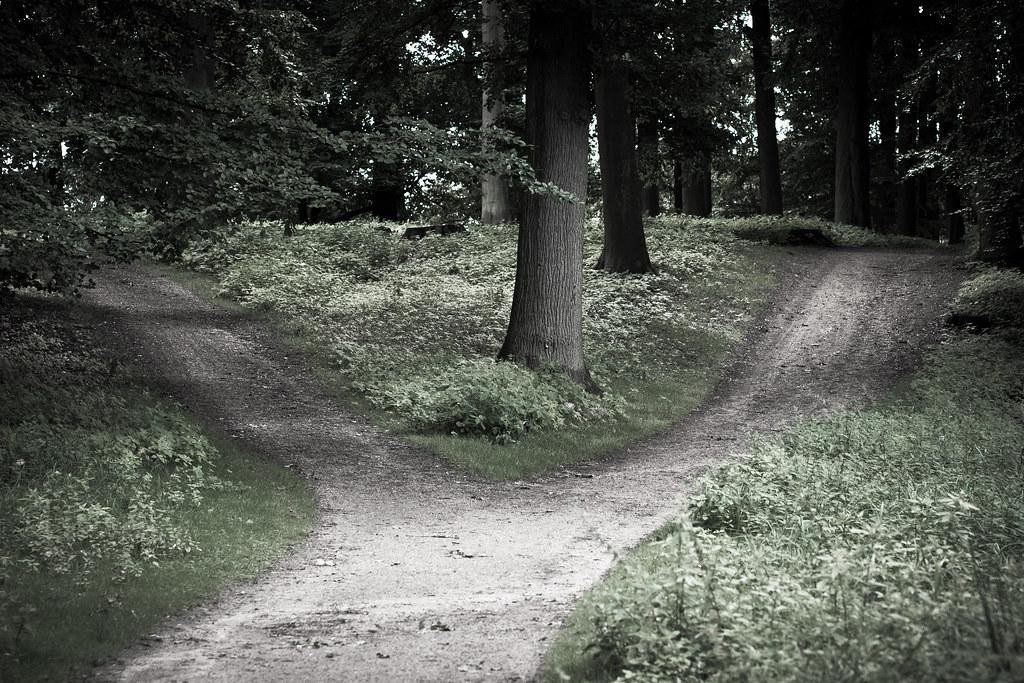
Determinism
Determinism could be a possible solution. If every event is fixed by the state of the world and the laws of nature, then once the past is set, there is only one way the future can go.
For example, if my decision to lie, to stay quiet when I should speak up, or to risk a lot to call out something unjust were all things that had to happen, given everything that came before. It starts to feel less like I am making choices and more like I am just the spot where a long chain of causes shows up.
Indeterminism doesn't really fix that. If some tiny "coin flip" at the quantum level nudges my brain one way or another, that might make what I do harder to predict, but it doesn't automatically make the decision any more mine.
Between a future that is completely set in advance and a future that sometimes comes down to randomness, there is no obvious place left to make genuine choices, which leads some philosophers to say the strong version of free will, the version that says people truly deserve blame or punishment just for what they have done, might not exist.
Yes, you can still call an action harmful and still try to change someone's behavior; you might still lock people up if they are dangerous, but you stop saying they ultimately deserve to suffer for it. They were thrown into a life they did not choose, built a character they did not design from scratch, and then did what that character predictably does.
Once you start seeing the world that way, differences between people seem to be "lucky" as I best see it.
A teenager who grew up in constant stress and an adult who grew up in safety and support are both acting from characters they never chose. They certainly didn't choose that path.
The teenager's quick temper or recklessness is not just a "bad choice" or a "gullible mistake."
There is a difference between slipping on a wet floor and deliberately shoving someone, even if both events stem from the same causes.
However, you don't need some magical ability to escape the laws of nature or rewrite the past to have free will. That's not what freedom is about.
Instead, a majority of philosophers argue that it's about your actions coming from your own motives, your own reasoning, and your own values, not from someone chaining you up, threatening you at gunpoint, or literally hijacking your body like a puppet.
Determinism just means there's a reliable pattern between who you are (your character, habits, desires) and what you do. A shy kid who was taught to stay quiet probably won't suddenly become a loud debater overnight—a kid who's been rewarded for speaking their mind their whole life probably will.
Imagine blaming someone for tripping because they "chose" to have two left feet, or praising someone for being tall because they "decided" to grow that way. That would be impractical.
John Martin Fischer and Mark Ravizza's ideas on "guidance control" seem like a good way to model a better solution. You're free and responsible in the moments when your usual way of reacting to the world is actually yours, and when it would shift if the situation or reasons changed.
Do we flinch whenever we see danger, or do we run to it? Would we stop if the stakes were higher, or the audience different?
Harry Frankfurt takes this even further. Imagine you're about to make a shady choice, maybe leaking a document that could get you in real trouble.
Unknown to you, a hidden neuroscientist is watching your brain. If you start to back out, they intervene and force the choice anyway.
But you never back out. You make the shady call all on your own, for your own reasons, and the scientist never lifts a finger.
Frankfurt asks: Are you still responsible?
Most people say yes. The action came from you, not the scientist.
The more reasonable conclusion, however, would be that responsibility doesn't depend on whether the universe could have magically unfolded differently in that exact moment. It depends on whether what happened flowed from your will, your motives, or your character.

A Middle Path Forward
Compatibilism skips a step. Sure, it's easy to say "you're responsible if you acted from your character."
But then you have to stop and ask: okay, but where did that character even come from? Nobody walks into life with a blank slate; they design themselves.
We would hesitate to fully blame you for deciding to punish you for something that your parents started truthfully.
A more honest position, and the one that seems most believable, sits between hard skepticism ("nobody's ever responsible") and easy compatibilism ("whatever you did was you, so own it"). This would be mapped out by admitting, yes, our starting points are almost entirely a matter of luck.
None of us chose our earliest fears, or the first voices that told us what counts as success.
The question we should be asking is: "Do I actually want to be this kind of person?" That reflective space is where a thinner kind of free will lives.
It shows up when someone grows out of a habit they hate, when they apologize not just for the outcome but for the person they were when they acted, or when they deliberately put themselves in better environments because they do not trust their own impulses.
Understand that free will is not a switch that is either fully on or fully off because it is a developing skill of self-guidance within the limits of a particular life. Almost no one is 100% responsible, but almost no one is 0% responsible either.
So what do we do with blame?
If that is right, then our practices of blame and punishment need to change tone. Instead of assuming everyone could have done exactly otherwise, as if we're all playing on the same field and should see each action as a sense of shaping oneself.
We should be asking "How much real room did this person have to reflect and choose differently?" instead of "What did they do?"

Conclusion
Do humans have genuine free will, then? Not in the fantasy sense where we float above all causes and choose from nowhere.
But not in the hopeless sense where everything we do is a reflex. But even inside those limits, there's usually just enough slack and think, "I don't want to keep doing this.
I don't want to be this guy." Most of us live in situations where we are handed circumstances we didn't pick, but with just enough to nudge us toward better versions.
Surely, it's not absolute or fair; however, it's enough to make holding each other accountable still mean something. You can say to someone, "That hurt, and you knew better," not because they're a godlike chooser, but because they had enough space to pause, reflect, and still go forward, and that is free will.

swipe for next article
What Becomes of Meaning in a Mathematical Universe?
If the universe is a mathematical structure, what happens to human meaning? An…
Free Will and the Brain: Who Decides First?
We prefer to believe that we are in control. But what if the feeling of choosing is not…
Why is the Night Sky Becoming Harder to See?
The night sky has inspired navigation and discovery. Yet, nowadays it's hardly visible…
Who said it wasn't the wind?
We judge the twisted tree but never the wind that shaped it. An essay on circumstance,…
Equality and democracy
Can we quantify or determine the value of a human being without being arbitrary?
A Case for Cosmic Silence: Where is Everybody?
If the universe is ridiculously huge, so must be the chances of life. So where is…