

What Becomes of Meaning in a Mathematical Universe?
If the universe is a mathematical structure, what happens to human meaning? An exploration through Tegmark, Camus, and Schopenhauer.
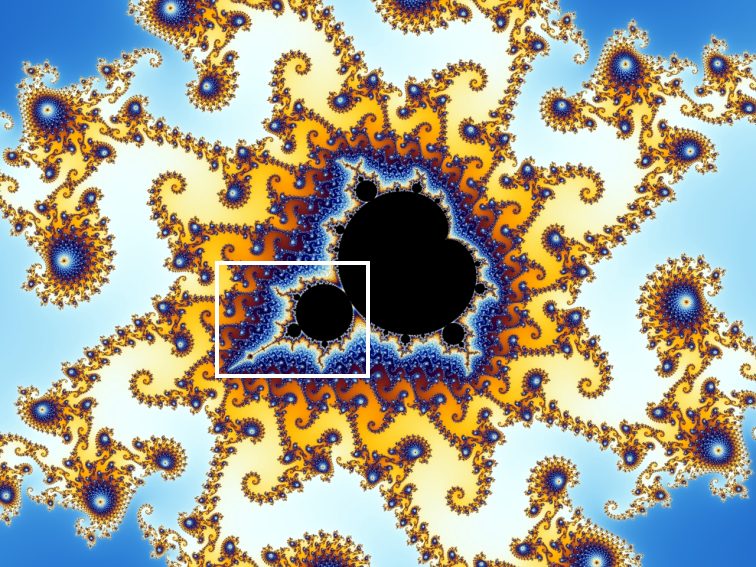
According to Max Tegmark, the physical universe is not merely described by mathematics but is mathematics: a mathematical structure in which mathematical existence and physical existence are one and the same. Critics have not been restrained in their response.
Physicist Peter Woit argued that the problem with Tegmark's proposal is "not that it's wrong but that it's empty" and "radically untestable." These are serious charges and may well be correct.
But I am less interested in whether the Mathematical Universe Hypothesis (MUH) is empirically verifiable than in what follows out of it if we grant it the benefit of imagination.
If the universe is mathematical then we are a priori mathematical, too. Tegmark refers to observers, including humans, as "self-aware substructures".
In other words, we are sufficiently complex configurations that perceive themselves as existing in a physically real world. A human life is a configuration of abstract relations, no different from a differential equation or a topological structure, perhaps only with a touch of added complexity.
The universe is not a painting adorned by mysterious creatures and unpredictable strokes, much more an unfolding of mathematical structures along well-defined trajectories and possesses no entity willing to declare itself of the author of this painting. There exists no appeal to proclaim a mysterious God the master of this landscape.
There is no mention of faith, hope, or any other human emotion in this routine and unremarkable universe. So, what becomes of man's strife to declare a meaning to his life in this cold and uncaring universe?
Here, longing for meaning is shamed by the realization that doing so is an overly complicated expenditure of energy.
The mathematical universe dissolves the significance we assign to anything, in particular endings. If every element is a mathematical structure then what we call death is more likely a reorganization.
No structure is annihilated, rather it is reprogrammed to take on a different form. Heraclitus noticed something adjacent to this twenty-five centuries ago.
"The river you step into is not the river you step out of because the river is not a thing but a process" he would've uttered mockingly if he witnessed my writing of this. I find that the MUH is nothing but that good old river after all.
If we are mathematical structures then the boundary between life and death is not a brick wall but a wavy function. Each configuration splits, merges, divides or multiplies into another with neither more nor less reality than the one preceding it.
What we mourn as loss is not a "loss": our universe knows of no losses.
It has taken me exactly 450 words to state that the universe is an ever-transforming, nonsensical structure. Now, I imagine the reader quite jubilant at the thought that we can finally proceed to the next chapter, and I find it delightful to be able to answer the most tormenting question of them all: does a mathematical universe imply a simulated universe?
That implication is not inherently natural to the MUH. As a matter of fact, Tegmark himself resists it.
But he notes that if physical reality is a mathematical structure, then a computed reality and a so-to-speak natural one become indistinguishable. There is thus nothing left in physics that marks something as more authentic than something else.
In a simulation, the question of what man makes of the universe is like asking what man makes of life itself. Albert Camus argues that in the course of "man's life" the inevitable question on what the point of it all is eventually arises.
He defines this divorce between man and his life, which was previously rich with meaning, as the "absurd". Consequently, "the human obsession with purpose is merely a distraction from the absurdity of existence".
If Camus came up with this theory by spending his quiet life in Algiers, then it's unimaginable what horrors a man who has seen the entire universe will come up with. The absurd for Camus is "a mind that desires and a world that disappoints".
Yet in a universe such as the MUH there is no disappointment. To disappoint is to react, and this universe does not speak.
Thus, the human quest for meaning under the MUH is not tragic in the absurdist sense. It is futile, not poetically nor tragically, simply innately pointless, like screaming at a chair and expecting an answer.
So why do we keep yelling?
I stand now on the summit of my discourse, and the view from here is no more joyful than at the foot of the mountain. What depresses me is not that the quest for meaning has been obliterated, but that it persists.
Our species could have cold proof that we exist for no reason at all, and it would still insist on finding one. So why does a world devoid of meaning make young thinkers commit suicide, yet the belief in meaning invokes an unyielding passion for life?
According to Schopenhauer the inner essence of everything is "the will": an aimless striving devoid of knowledge and independent of space and time. Because the will has no goal or purpose, satisfaction is impossible.
What Schopenhauer called "the will" the MUH might simply call transformations of structures. Whether you opt for the sci-fi or the classic philosophical way, the result is identical.
Something in us keeps pushing not because it expects to arrive somewhere but because pushing is what it does.
There is no escape from this observation. The very act of writing these words is an act of meaning-making.
Indeed, the argument that seeking a meaning is futile is itself a meaning-seeking act. Thus, perhaps what depresses me is not the absence of a meaning itself, but our inability to articulate our own pointlessness without converting that pointlessness into a point.
Camus whispers a bittersweet "the struggle itself toward the heights is enough to fill a man's heart". But the MUH doesn't accept these notions.
The universe is cold and dark and seems unsupportive of the life it hosts. It prefers unconsciousness: the boulder does not know it is a boulder; the mountain does not know it is a mountain.
And Sisyphus looks around himself… He is the only one who is conscious... he is the only one who suffers.
I admit, in this context things are looking exceptionally dire for humanity. All of the world is entirely unbothered by its existence, yet we must suffer from a hard-wired obsession with our existence.
I imagine a God furious with us, armed with the curse of consciousness: like a misbehaving child we are struck and infected with that disease. Man's ability to perceive consciously is his life's antagonist.
Whence springs all the quarrels that differentiate humanity from equally alive, but not conscious, animals: war, betrayal, jealousy, arrogance, all apples of the same tree. They all yearn from the insatiable, conscious human mind, who pretends to be the ally of his mind.
swipe for next article
Free Will and the Brain: Who Decides First?
We prefer to believe that we are in control. But what if the feeling of choosing is not…
Why is the Night Sky Becoming Harder to See?
The night sky has inspired navigation and discovery. Yet, nowadays it's hardly visible…
What was unique about the Nobel prize in Physics 2025?
Normally, balls don't fly through walls. However, quantum particles do. Find out how 3…
The Paradox of Consciousness
On the difference between the existence of experience and the capacity to recognize it —…
Does A Purposeless Universe Equate To Freedom?
As far as the anxious, achievement obsessed 21st century is concerned - nothing ever…
Why 1+1=2 (And Why It Took 379 Pages to Prove It)
For two millennia, humanity assumed Euclid's geometry axioms were the literal,…