

Metal-Organic Frameworks and Yet Another Nobel Prize
Structures that allow for water purification, substance separation, extraction of CO2 out of the atmosphere?

Header image: Niklas Elmehed © Nobel Prize Outreach
Just a few days ago, a series of Nobel Prizes were awarded. Among which the Nobel Prize in Chemistry 2025, which went to Susumu Kitagawa, Richard Robson and Omar M.
Yaghi. Of the university of Kyoto, Melbourne and California (Berkeley), respectively.
According to the Royal Swedish Academy of Sciences, the Nobel Prize laureates "created molecular constructions with large spaces through which gases and other chemicals can flow". These materials can essentially stretch to make holes between the molecules holding it together.
These holes could then be filled with numerous other materials, such as hydrogen gas or carbon dioxide.
The media is already discussing its potential use in capturing CO2 out of the atmosphere thanks to the large cavities in this material. Even some electrically conductive versions have been developed, which could be used as semiconductors.
Metal-Organic Frameworks (MOF)
In 1989, Richard Robson connected long "rods" of organic molecules to metal atoms, specifically those with tetrahedral and octahedral geometries. This metal atom would hold these long organic molecules in place, forming a crystal-like structure.
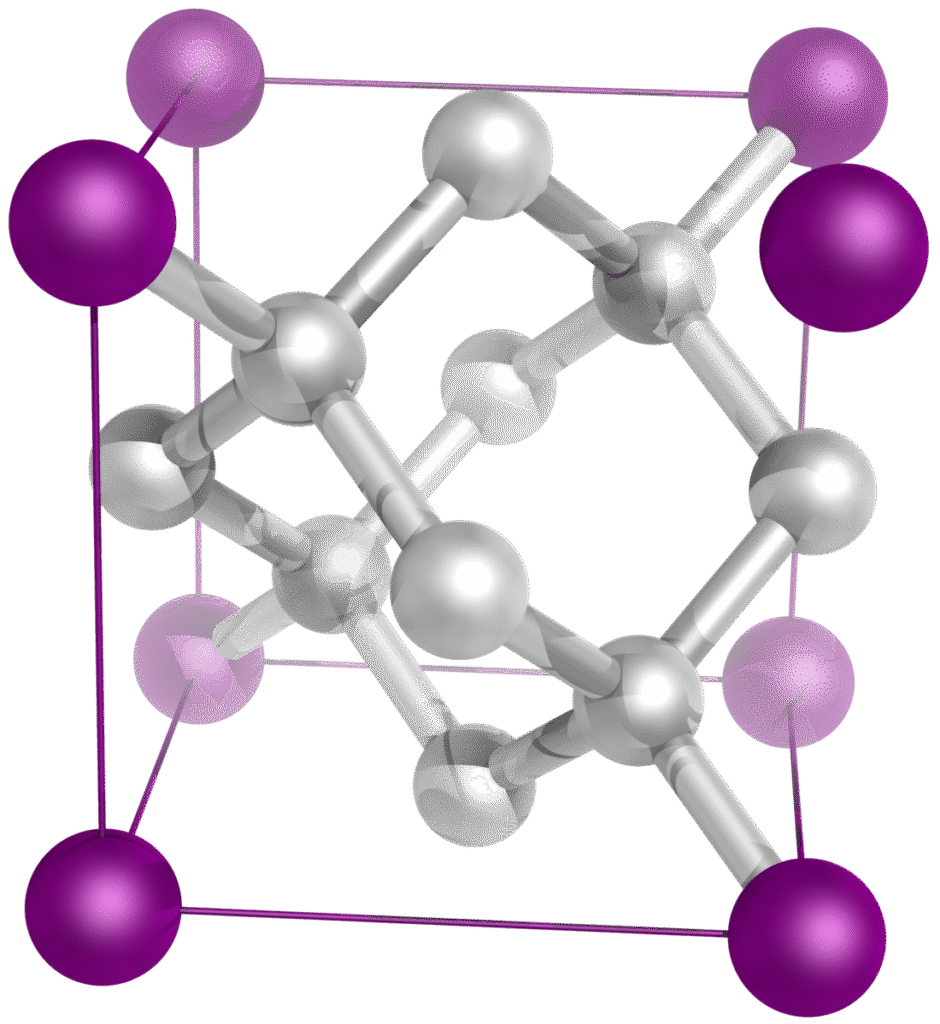
Fig. 1: Structure of a diamond.
Carbon atoms form four bonds with each other, leaving void between them.
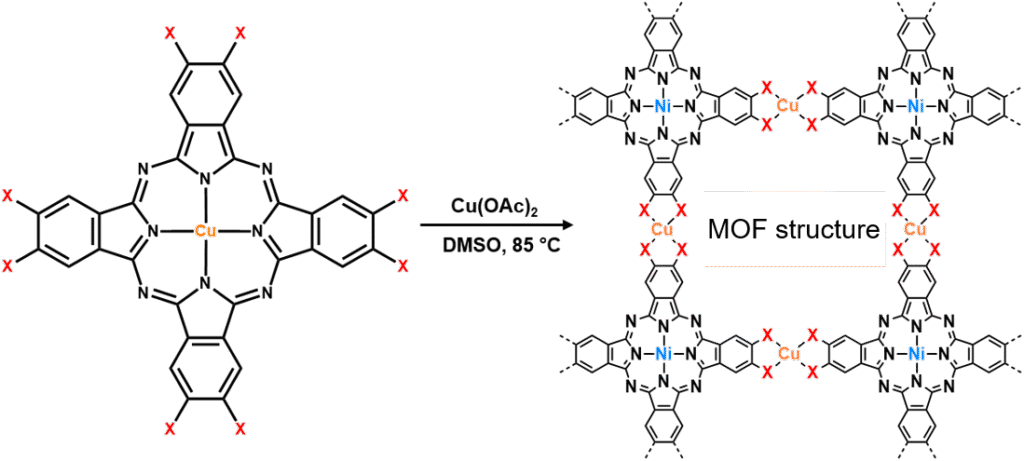
Fig. 2: Example of a metal-organic framework (MOF), where one copper atom is attached to a "rod-like" organic molecule.
Synthesis of early MOFs
Since Robson's synthesis of an early metal-organic framework (MOF), a lot of other types have been produced. The problem was that the molecule Robson created was very unstable.
Yaghi and his coworkers synthesized MOF-5, a much stabler form of MOF. MOF-5 can be heated to 300°C and doesn't collapse when gas exits the structure.
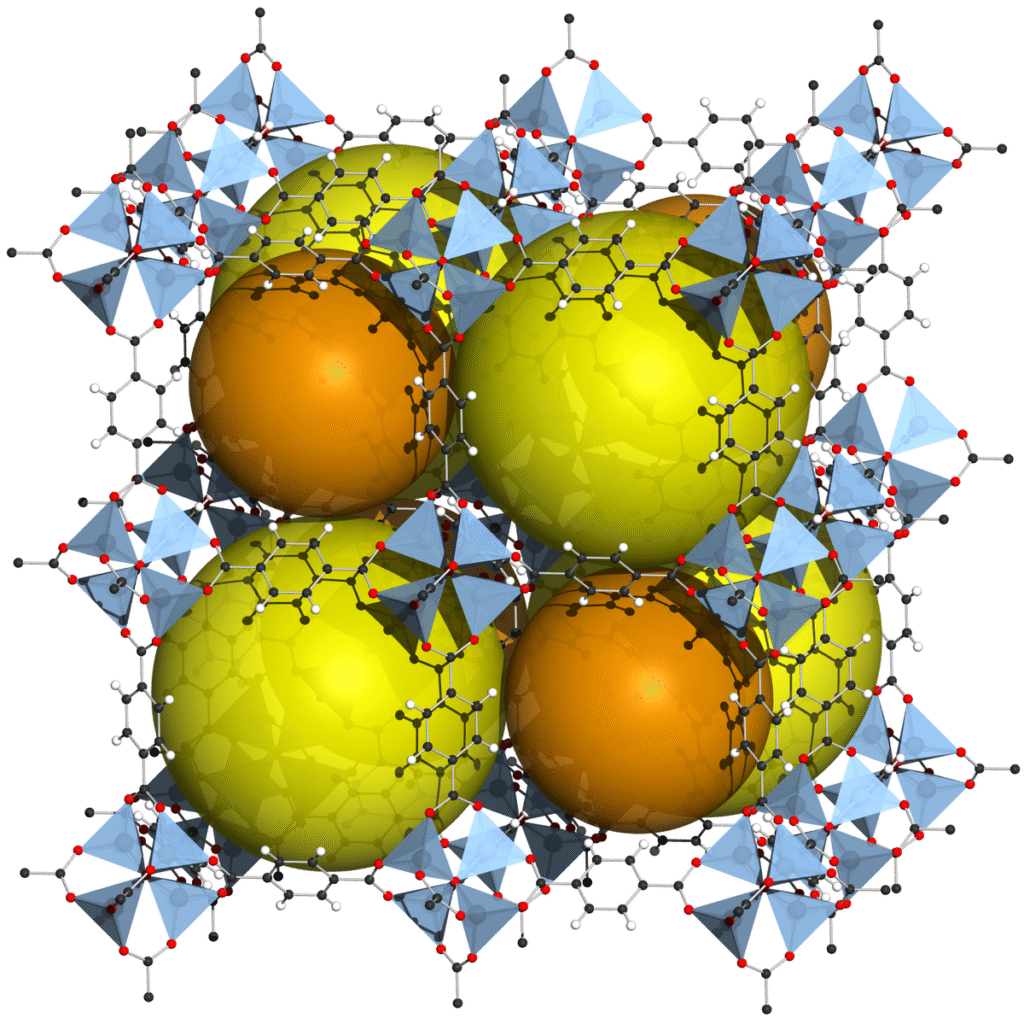
Fig. 3: MOF-5 was one of the earliest stable MOF structures and had promising hydrogen storing capabilities.
What does the future of MOFs entail?
The Nobel Prize award in this area of Chemistry will undoubtedly attract more attention to the study of MOFs. MOFs have found applications in anything from extracting CO2 from the atmosphere to harnessing water resources.
They are and can become more useful in industry, such as in the separation or purification of chemicals. Perhaps soon many of the daily objects we use will contain MOFs.
swipe for next article
Everything In the World Can Be Simplified Into Its Smallest Components
I've eaten my grandmother's cookies immeasurably often, and so, being curious, I…
What Happens to Milk as it is Made Into Cheese?
The chemistry of milk and cheese: how does milk's structure transform into a variety of…
The 2024 Nobel Prize in Chemistry: A simple explanation
Nobel-winning AlphaFold solves a 50-year mystery, revolutionizing protein structure…
What was unique about the Nobel prize in Physics 2025?
Normally, balls don't fly through walls. However, quantum particles do. Find out how 3…
What Becomes of Meaning in a Mathematical Universe?
If the universe is a mathematical structure, what happens to human meaning? An…
A Theory on Logic and Science
How is logic supposed to work? And if science is built on logic, what are the…