

Equality and democracy
Can we quantify or determine the value of a human being without being arbitrary?
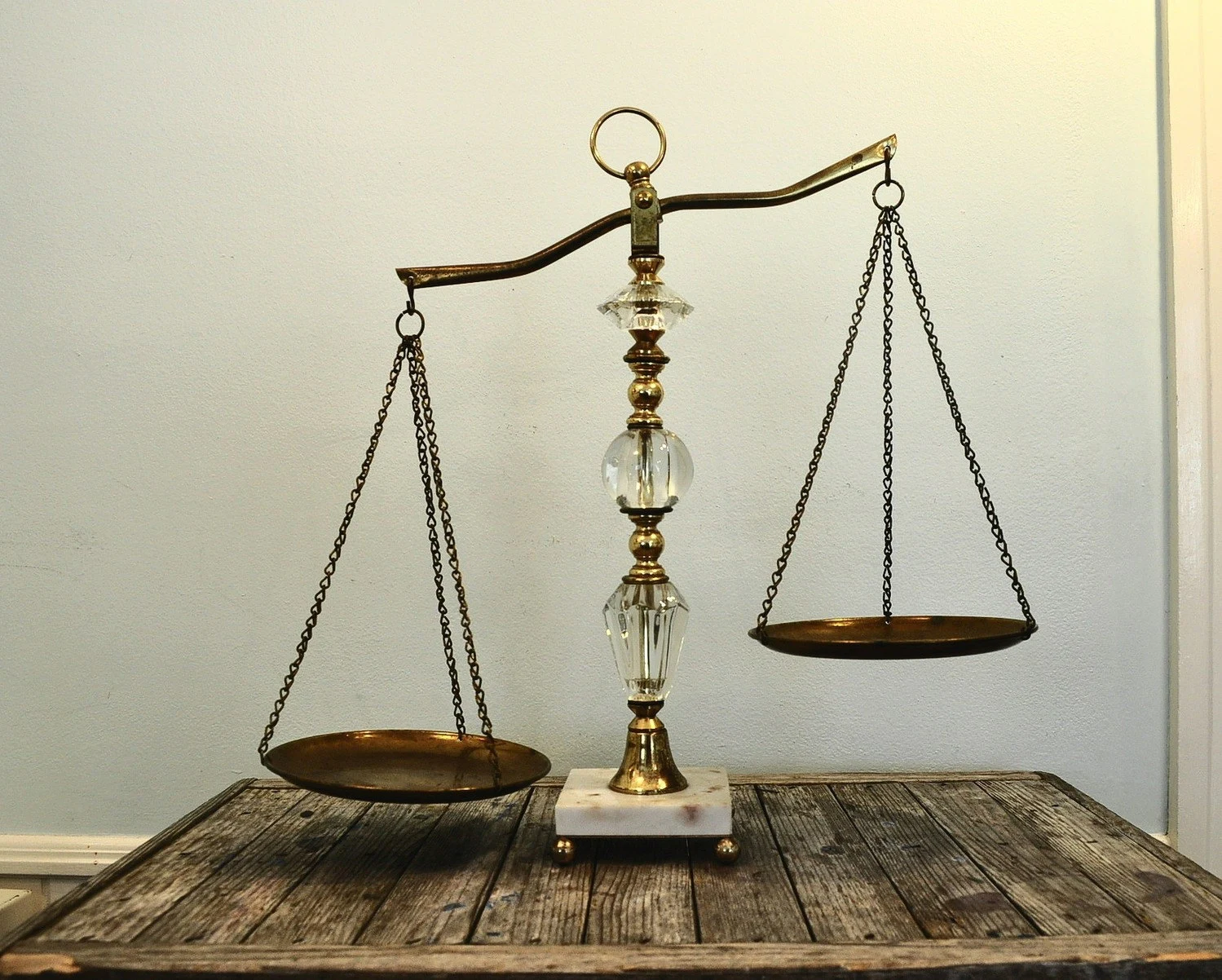
Can you measure the value of a human?
Can we quantify or determine the value of a human being without being arbitrary? You can't put a price tag on a human life.
It is impossible to say your neighbor Steve is worth 10 euros. Just like how your sister Susan isn't worth 15 dollars… at least, you can't say that without resorting to "unobjective" criteria.
This comes down to the simple fact that we're all unique, and you cannot replace a person like you can replace a 10 dollar bill.
If we cannot assign a monetary or numerical value to a human life without falling into arbitrariness, then we must treat all human beings as fundamentally equal in moral worth. This is not a romantic sentiment but a logical necessity: if there is no objective scale by which to rank persons, then ranking is unjustified.
As Kant has said, human beings possess dignity rather than price; they are ends in themselves, not means to be exchanged or valued on a market. From this it follows that everyone should enjoy the same fundamental rights and freedoms, but also bear the same basic obligations toward one another.
A society where some claim protections while others refuse responsibilities is not a fair society; it is a convenient one for those who take more than they give.
And yet, although all people are fundamentally equal in moral or political status, we do not need to pretend that empirical differences do not exist. Men and women, for instance, show different statistical patterns in various measures of well-being.
According to a study on Subjective Well-Being, men tend to score higher on individual health metrics, while women report a higher overall life satisfaction index.¹ However, such differences are not sufficient grounds to claim that women are inferior to men, or vice versa.
This simply illustrates that moral equality is perfectly compatible with the diversity seen in empirical studies; equality does not require uniformity, and recognising differences does not mean you are establishing a hierarchy.
Yet, all the same, equality has its limits. The above does not mean that, because we are all equal, rights are inviolable regardless of behaviour.
Quite the opposite: anyone who places their rights above those of others, effectively denying the human condition of their fellow citizens, must face consequences commensurate with this violation. Freedoms and rights can and should be drastically reduced for those who use them to harm or dominate others.
Equality does not grant impunity; it demands reciprocity.
Now, turning to the subject of democracy, we must ask: is it fair that someone without knowledge should have an opinion, and that this opinion be considered just as valid as that of someone who does have knowledge about the subject they are discussing? In my view, certainly not.
No matter how equal we may be, a lie cannot be considered just as valid as the truth; not everything goes. When someone is sick, do they go to the doctor so the doctor can prescribe medication, or do they go so the patient can choose their own medicine?
Without a doubt, the patient goes so the expert can determine the best solution. However, we must acknowledge that this analogy has limits: medical treatment is primarily a technical question with relatively clear criteria for success, whereas political questions involve competing values, such as liberty versus security or present interests versus future generations, that no expert can settle on behalf of others.
Still, this does not mean expertise is irrelevant; it means that expertise should inform democratic deliberation rather than replace it.
Democracy has been the subject of criticism since the time of Socrates, who claimed that it stifled critical thinking, drowning it in the pseudo-truth of the majority. More recently, the mathematician and economist Kenneth Arrow demonstrated through his Impossibility Theorem² that no perfect democratic system can exist: there will always be a margin where the system unfairly favours one option over another, or where the order of winners depends on mathematical manipulations.
This reveals the falsehood of the perfection that democratic systems promise.
In conclusion, the political system par excellence will be one where the equality of individuals, the basic foundation of any just system, is guaranteed, but also where what is right takes precedence over the decision of an uninformed majority. This points toward a form of aristocracy in the classical sense: not rule by inherited wealth or bloodline, but rule by the most capable, the most educated, and those best equipped to discern the common good.
As José Ortega y Gasset argued in The Revolt of the Masses, modern democracy risks becoming a tyranny of the ignorant when the average citizen demands to have the final say on matters beyond their comprehension. Ortega defended the idea of a "select minority," not an elite defined by birth or privilege, but by excellence, preparation, and genuine vocation for public affairs.
A well-ordered society, he believed, must reserve its most important decisions for those who have earned the right to make them through study, reflection, and demonstrated judgment. This is not a rejection of democracy, but a correction of its excesses.
It is a call for qualified democracy or epistocratic restraint: a system where all voices are heard, but not all voices carry equal weight, and where the most qualified guide the most consequential choices. The obvious objection, "who selects the select?"
must be answered with institutional safeguards, transparency, and continuous accountability. But the alternative, surrendering public reason to the loudest or most numerous, is not true equality; it is the abdication of reason itself.
swipe for next article
Do humans have genuine free will, or are our choices just the product of circumstances and character?
The essay explores the question of whether humans possess genuine free will or if our…
What Becomes of Meaning in a Mathematical Universe?
If the universe is a mathematical structure, what happens to human meaning? An…
A Theory on Logic and Science
How is logic supposed to work? And if science is built on logic, what are the…
Who said it wasn't the wind?
We judge the twisted tree but never the wind that shaped it. An essay on circumstance,…
A Case for Cosmic Silence: Where is Everybody?
If the universe is ridiculously huge, so must be the chances of life. So where is…
Why 1+1=2 (And Why It Took 379 Pages to Prove It)
For two millennia, humanity assumed Euclid's geometry axioms were the literal,…