

Everything In the World Can Be Simplified Into Its Smallest Components
I've eaten my grandmother's cookies immeasurably often, and so, being curious, I wondered: is it possible with potatoes?
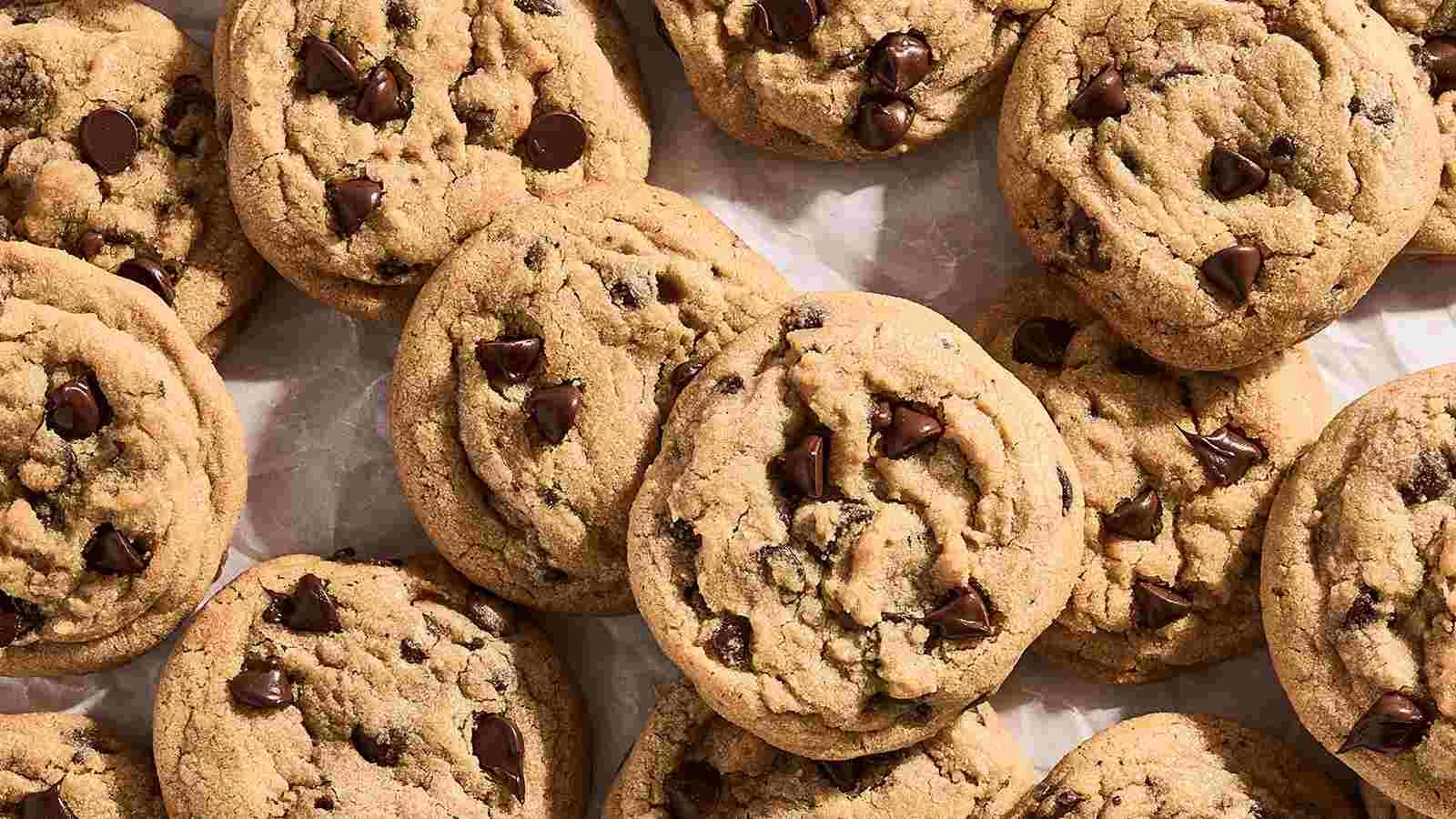
Here is my grandmother's recipe for butter cookies: 250g flour, 125g butter, 100g sugar, 1 egg, a dash of vanilla, half a teaspoon of baking powder, a sprinkle of salt. Mix, chill, roll and cut into shapes.
I've eaten these cookies immeasurably often, and so, being curious, I wondered: is it possible to do the same thing… with potatoes?
You might've come across all kinds of special recipes that avoid using wheat flour. But I don't want to simply share another alternative baking recipe with you: I want to use chemically modified potato starch as a base for my cookies.
The plan is simple: extract starch from potatoes and turn it into simple sugars. Surprisingly, this is done more often than you think in industry.
High fructose corn syrup, beer and other glucose syrups find innumerable applications in our everyday lives.
What is starch?
Starch is found in many loved products, from cakes and tarts to peas and corn, and is considered a polymeric or complex carbohydrate. It is the main component of many different flours, but its origins lie in nature: Starch is produced by the majority of green plants as means to store energy that is made during photosynthesis.
Starch is made up of many small sugar components, called glucose, which link together to form one long chained molecule. These long chained molecules are amylose and amylopectin, which are both made up of glucose.
Amylose and amylopectin
Amylose consists of a chain of glucose molecules, which are linked together by glycosidic links. These glycosidic links connect carbon atoms 1 and 4 of two glucose atoms to each other.
Hence, they are called 1,4-glycosidic links.
Amylopectin has an equally interesting 3D structure. A model for the molecule proposed by Robin et al suggests an arrangement where one chain branches off into different clusters, called the 'cluster model'.
How starch breaks down into sugar
When we consume starchy products, they enter our mouths and are immediately confronted with enzymes in our saliva. Amylase enzymes in our saliva take apart starch molecules.
α-Amylase randomly cleaves glycosidic links between glucose molecules. This random cleaving produces shorter chains of glucose molecules, called dextrose and maltose.
The experiment
Industry has immensely improved their starch-to-glucose processes over the past millennia. The very enzymes at play in your saliva and intestine are for sale online, and it isn't difficult to make your own high fructose corn syrup at home.
This brings me to my original quest to convert potatoes into cookies. I wanted to use the potato starch and break it down into its simpler sugars: dextrose, maltose and glucose.
The steps are: 1) Extracting the starch from potatoes, 2) Breaking down the starch with enzymes, 3) Making cookies out of 'glucose syrup'.
If you're curious not to just read about the theory, but also to see the practice, then stay tuned for the YouTube video!
swipe for next article
What Happens to Milk as it is Made Into Cheese?
The chemistry of milk and cheese: how does milk's structure transform into a variety of…
The 2024 Nobel Prize in Chemistry: A simple explanation
Nobel-winning AlphaFold solves a 50-year mystery, revolutionizing protein structure…
The Underground Highway for Trees' Survival
For the past half century, evidence has been accumulating that trees are not just static…
Metal-Organic Frameworks and Yet Another Nobel Prize
Structures that allow for water purification, substance separation, extraction of CO2 out…
A Theory on Logic and Science
How is logic supposed to work? And if science is built on logic, what are the…
Why is the Night Sky Becoming Harder to See?
The night sky has inspired navigation and discovery. Yet, nowadays it's hardly visible…