

Why 1+1=2 (And Why It Took 379 Pages to Prove It)
For two millennia, humanity assumed Euclid's geometry axioms were the literal, unshakeable truth of the universe.

For two millennia, humanity assumed Euclid's geometry axioms were the literal, unshakeable truth of the universe. We took it as a total fact that parallel lines never cross and that the angles of a triangle always add up to 180 degrees.
People didn't think of it as something just derived from defined rules, they thought of it as the universal truth. This is because they believed the ruleset were absolute truths in themselves.
But centuries later, Albert Einstein realized that the physical universe is actually curved and warped by gravity. He needed math to describe it, but he didn't find it by looking at reality.
Instead, he found it in Non-Euclidean geometry, a math that humans had created decades earlier out of pure mathematical curiosity, just to see what would happen if they changed Euclid's rules and to gain a better understanding of geometry itself.
Einstein did discover a law of nature, but the math he used wasn't taken directly from reality. It was something humans invented earlier by exploring different rules.
Later, we found out that some of those invented rule systems actually match how the universe behaves. But it isn't merely a coincidence that it did match.
It was a very specific mechanism combined with a little bit of luck.
We were all taught as children that 1 + 1 = 2. But have you ever actually questioned why?
To understand how arbitrary this is, we have to go back to exactly what we did as kids to learn arithmetic: counting with our fingers.
Except, if you wanted to rigorously prove what you did with your fingers as a kid from absolute scratch, it would take you a while. There is a famous mathematical text called Principia Mathematica where the authors literally took over 300 pages of dense, mind-numbing logic just to finally conclude: "From this proposition it will follow, when arithmetical addition has been defined, that 1+1=2."
They had to do that because symbols don't inherently mean anything. The symbol "1" is just a character we invented.
What they really did, isn't just make a "Hello World" program. They made the entire operating system by themselves before using it to make a Hello World program.
The fact that the number 1 means one specific specimen of an object type is something to think about. We humans have invented the mapping between numbers and reality.
Anyways, let's get back to counting. To build counting from nothing, we don't start with a number line; we start with two basic assumptions.
First, we assume that a starting point exists (let's call it zero). Second, we assume that every number has a successor which is just a fancy way of saying "the next number."
For every number, there must be a successor. The successor of 5 is 6, and of 6 is 7.
This means that there is an infinite number of numbers, also known as the whole number line.
Subtraction is just addition running in reverse. If addition means taking steps to the right on our number line, subtraction means taking steps to the left.
This brings us to the concept of a predecessor which is just the fancy math term for "the previous number." The predecessor of 2 is 1, and of 1 is 0.
But then, humans hit a problem. We couldn't possibly keep on making new symbols, could we?
We'd need infinite symbols. Imagine seeing a number (say 'T'), and having absolutely no clue that it represents what we now know as 7807910891203.
That wouldn't really be useful now, would it?
So, we made a choice. We picked ten arbitrary symbols, namely 0, 1, 2, 3, 4, 5, 6, 7, 8, and 9, probably because we have ten fingers to point at things with.
But once you hit the successor of 9, instead of inventing a brand new symbol, we invented a clever piece of syntax. We decided to wrap the numbers back around while changing a number to the left of it.
That is all base 10 is. When you write a number like 352, you aren't looking at a single cosmic entity.
You are looking at a shorthand formula: 3(10^2) + 5(10^1) + 2(10^0). By using the power of 10^n multiplied by one of our ten basic symbols, we gave ourselves a way to let our number system expand to infinity without ever needing to memorize an eleventh symbol.
And decimals? Same exact trick, just in reverse.
When we needed to break numbers down into smaller parts, we didn't discover fractions floating in space. We just extended our syntax and let n be negative.
A number like 0. 2 is just 2(10^-1), which is just 2/10^1.
But we skipped a few steps to build this syntax. We haven't even defined multiplication yet, let alone the negative numbers we just used in that exponent.
Let's look at multiplication. At its core, multiplication is just a speed-run shortcut for convenience; it's just repeated addition.
When you multiply 3(times)1, you are just taking the number 3, one time. When you multiply 3(times)2, you are adding 3 two times to get 6.
But here's the neat trick: even if you flip it and add 2 three times, you still get 6.
To visualize why this game rule stays perfectly consistent no matter which way you turn it, imagine drawing a group of 3 parallel lines. Now, overlay another group of 4 parallel lines right across them.
If you count the number of points where those lines smash into each other, you get 12 intersections.

If you flip the script to 4(times)3, you just reverse the grid: 4 parallel lines crossed by 3 parallel lines. The image is completely inverted, but the number of intersections remains exactly the same.

Exponentiation is just the next level of convenience: if multiplication is repeated addition, exponentiation is repeated multiplication. Writing 3^4 doesn't mean you found a new mathematical entity; it's just a shorthand notation telling you to multiply 3 by itself 4 times (3(times)3(times)3(times)3).
We invented this syntax simply to express repeated multiplication easier.
And now let's deal with the other thing we haven't yet defined. Negative numbers.
To see why we have negative numbers, we first have to map our counting system onto a straight line. Imagine drawing a starting point and labeling it 0.
Now, space out your numbers evenly to the right, jumping from 0 to 1, then 1 to 2, 2 to 3, and so on, stretching out into infinity. This is the positive number line.
It's clean, it's intuitive, and for a long time, humanity thought this was the complete picture.
But then, people started to wonder about the other direction. They asked a question that broke the original ruleset: Is there a predecessor to 0?
What happens if you try to take a step to the left of your starting point?
In the physical world, the answer was obviously "no". You could have debts, but you can't point to a field containing -1 cows.
Ancient Greek mathematicians actually rejected the entire concept of negative numbers because, to them, numbers had to represent physical things like distance or area. You couldn't have a square with a negative side length, so why bother?
But then algebra happened. Instead of writing down the numbers, mathematicians said 'we do not know what that number is', and started defining the relation of that "unknown number" with other numbers.
When we say x-1=0, we aren't just counting anymore. We are defining the relationship between x, 1 and 0.
People started writing down quadratic equations, formulas used to find unknown values, and they hit a massive wall. If you try to solve an equation like x + 5 = 3, the math forces you to ask: what number, when added to 5, gives you 3?
On our positive number line, that is impossible. It has no solution.
Mathematicians faced a choice: either declare the equation broken, or change the code of the game. So, they chose to invent a fictional realm to the left of zero.
We didn't discover negative numbers; we created them because they were too useful to ignore. By inventing the negative number line, suddenly a lot of equations had a playground where its solutions could actually exist.
But changing the code to allow negative numbers didn't fix every bug in the system. In fact, it accidentally created a worse one.
When mathematicians started playing around with their shiny new quadratic equations with negative numbers, they ran into another wall. What happens when you try to solve an equation like x² + 1 = 0 (which becomes x² = -1)?
To solve it, you need a number that, when multiplied by itself, equals -1.
Even on our brand-new number line, this is flatly impossible. A positive times a positive is positive (2 × 2 = 4).
A negative times a negative is also positive (-2 × -2 = 4). There is physically and logically no place on that line for a number that squares to a negative (Hint: 'on the line' is doing a lot of work here).
Once again, humanity faced a choice: invent a new rule, or make it impossible. So, we invented i, the imaginary unit, defined explicitly as i = √-1.
But this didn't come without resistance. People complained that you couldn't point to -1 cows, and you certainly couldn't point to i cows.
But the reason why this is accepted is because it is really useful. It can be used for rotation.
Mathematicians expanded the number line to something called the complex plane. The way it works is simple.
You take the number line, draw a perpendicular line through 0. And suddenly, every point on that plane could be expressed in the form of a + bi, where a showed the horizontal distance of the number from the origin along the original number line (the real axis), and b showed the vertical distance of the number from the origin along that new perpendicular line (the imaginary axis).
The magic was that if you took a point on the number line and multiplied into it, you could rotate it by 90 degrees.
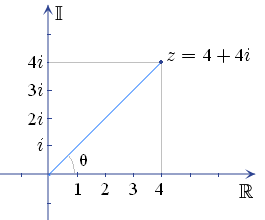
By inventing a completely fake, "impossible" number, we accidentally created the ultimate tool for describing rotation, alternating electrical currents, and quantum mechanics. We invented a "ghost number" simply because the game needed it.
But this is where critics will inevitably push back. If mathematics is just an arbitrary game we invented in our heads, why does it perfectly describe reality?
Why do our formulas work so flawlessly across multiple dimensions?
The answer is that mathematics explores a vast space of logically consistent structures. Geometry itself began as an attempt to understand space by exploring different possibilities.
Physics later determines which of those structures provide accurate models of the universe, while the others remained valuable mathematical systems in their own right.
In our daily lives, we can only observe four dimensions, three of space and one of time. Try to visually picture a fifth dimension, or an eleventh.
Your brain isn't wired for it. Yet, the algorithms we create and the formulas we write handle ten, a hundred, or an infinite number of dimensions with absolute ease.
This isn't because higher dimensions are a hidden cosmic layout waiting for our equations to discover them. It is because we are the ones who defined what an axis is.
We decided that a "dimension" (here, I am referring to the axes of coordinate geometry) is just an independent variable container in an algebraic relationship. Once we realized that a 3D coordinate is just a set of variables, the syntax didn't break if we just kept typing more variables into the equation.
We didn't discover hyperspace; we just extended our text-based syntax into an infinite playground because the rules we made allowed it. The formulas work in higher dimensions because we designed them to be scale-invariant from the very start.
This brings us to a deeper realization about the nature of these mathematical frameworks. Each system, whether it is Euclid's flat geometry, spherical geometry where parallel lines smash into each other, or hyperbolic geometry where they diverge wildly, is not a rival claimant to the "One True Reality."
They are just different, internally consistent possibilities.
We actually don't know which mathematical framework describes the absolute truth of reality. In fact, reality itself might be completely separate from any framework we could ever conceive.
When Einstein used Non-Euclidean geometry to map general relativity, he didn't invent Non-Euclidean math. Mathematicians had done it before him, and then it turned out to describe reality.
They pursued a mathematical question for its own sake, and decades later it turned out to describe spacetime. They realized: "Oh, the universe happens to behave like the game they made up."
It is a brilliant, beautiful convergence of utility between human invention and physical reality.
At this point, one of you might ask: "Well, if math is just adding random stuff together out of pure whim, can I just make up a completely random rule right now, add it to the pile, and call it math?"
To put it bluntly: no.
In classical logic, you can invent any starting assumption you want, but you are strictly bound by the requirement of consistency. If you introduce a rule that directly contradicts a rule you already established, the system collapses.
In logic, a contradiction allows you to derive that a statement is both true and false at the same time, a logical explosion that renders the entire framework completely useless.*
This is exactly why mathematicians did not reject root(-1), or i, the moment it appeared. It certainly looked absurd, but absurdity is not the same as inconsistency.
Treating it as a new kind of number did not contradict any existing rule or cause the logical framework to collapse. In fact, during the Renaissance, mathematicians solving certain cubic equations (Rafael Bombelli among them) found themselves forced to manipulate square roots of negative numbers, only for them to cancel out and leave perfectly ordinary real answers, which were tested by hand.
The new object behaved consistently, so mathematics had reason to experiment with it. And then something remarkable happened.
A number that did not seem to exist anywhere in reality became one of the most useful inventions in mathematics. Before complex numbers, analyzing waves meant wrestling directly with long chains of sines, cosines, derivatives, and trigonometric identities.
The mathematics worked, but it was cumbersome. Then mathematicians realized that oscillations could be represented using Euler's formula,
e^(iθ) = cos θ + i sin θ
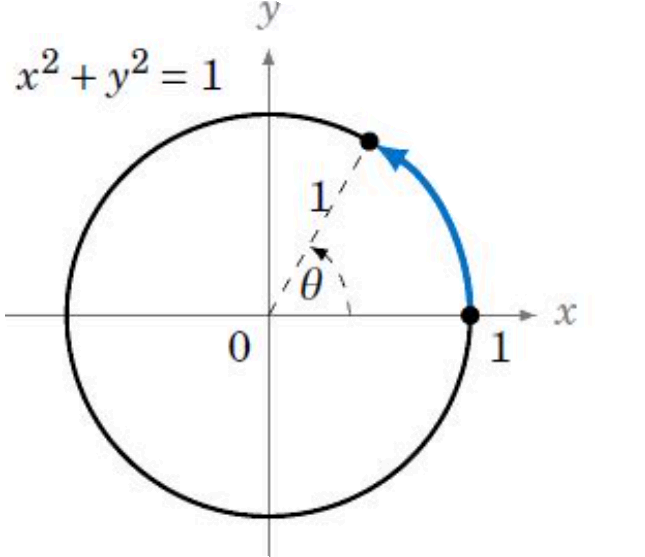
This transformed many difficult trigonometric manipulations into simple exponential algebra. Even rotations, once treated as separate geometric operations, became as straightforward as multiplying by e^(iθ).
Nothing about the physical world had changed. Humanity had simply invented a new mathematical object that made an enormous class of problems dramatically easier to solve.
Mathematics is indeed a game created out of human-made rules, but it is a game played with absolute, unyielding discipline. We are cosmic game designers, constructing beautiful, alternate universes out of nothing but symbols and logic.
We build entire worlds on ideas based on rules we choose. And since those systems have similar assumptions to reality, every now and then they can describe it with similarity, or even represent it while not being similar at all.
swipe for next article
Does A Purposeless Universe Equate To Freedom?
As far as the anxious, achievement obsessed 21st century is concerned - nothing ever…
An Abstracted Reality: How your mind creates your own unique lifeworld
Nobody but yourself will know the full scale of thoughts lingering in your own head.
The Paradox of Consciousness
On the difference between the existence of experience and the capacity to recognize it —…
What Becomes of Meaning in a Mathematical Universe?
If the universe is a mathematical structure, what happens to human meaning? An…
A Case for Cosmic Silence: Where is Everybody?
If the universe is ridiculously huge, so must be the chances of life. So where is…
A Theory on Logic and Science
How is logic supposed to work? And if science is built on logic, what are the…