

The Underground Highway for Trees' Survival
For the past half century, evidence has been accumulating that trees are not just static plants.
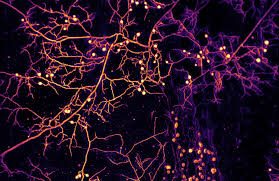
For the past half century, evidence has been accumulating that trees are not just static plants that are left to fend for themselves. On the contrary, trees are dynamic organisms that communicate and exchange resources through a dynamic underground system that is linked to their survival.
This post will aim to delve into how trees exchange vital nutrients and send stress signals through fungal networks.
How Trees and Fungi Thrive Together
You may have heard of symbiotic relationships in classic biology. A mycorrhizal network is such a symbiosis.
Mycelium, a type of threaded, branch-like fungi, forms a symbiosis with trees in an ecosystem. They 'bind' to the roots of trees and work almost as 'extensions' to tree roots, connecting to other trees and flora in the ecosystem.
These fungal networks are mostly thought to be mutualistic, even though some species can engage in parasitism.
Interaction between these two species occurs with the goal of exchanging photosynthates and minerals from the soil. Plants use water and carbon dioxide with activation energy from sunlight to make sugar (glucose):
6CO₂ + 6H₂O + light → C₆H₁₂O₆ + 6O₂
This fosters a significant relationship between tree and fungus which uses the currency of photosynthates (glucose) and minerals (such as P, C, N and H₂O) from the soil.
Types of Mycorrhizal Networks
We divide into two major kinds of mycorrhizal fungi: - Ectomycorrhizal fungi (EMF) — build a sheath around the root cells - Arbuscular mycorrhizal fungi (AMF) — penetrate the root cell, forming vesicles and arbuscules inside the tree root cells
Biochemical Interactions Between Fungi and Plants
Mycorrhizae extract nutrients from the soil, which are absorbed by plant root cells. Without the mycorrhiza, plant root cells' nutrient uptake pathways are much less effective.
As far as arbuscular mycorrhiza (AMF), it can absorb nitrogen N from the soil either inorganically (nitrate NO₃⁻ and ammonium NH₄⁺) or organically (amino acids). These are transported to the extraradical mycelium, converted to Arginine, then transferred to the intraradical mycelium where it is broken down into NH₄⁺ and transferred to the host plant.
A similar process happens with phosphorus P forms, stored as polyphosphates (polyP) and then broken down to make nutrients available to the plant.
Impact on Agriculture
Many fertilizers use phosphate as an important nutrient for plants. Unfortunately, phosphate is a non-renewable resource.
However, mycorrhizal fungi are extremely efficient at making phosphate available as a nutrient for plants, posing a significant alternative to fertilizers.
Final Thoughts
Next time you take a walk in the forest you'll know what is happening under your feet. The relationships and mycorrhizal species explored today are merely the tip of the iceberg.
Our planet is infinitely complex and it takes a huge effort for us humans to understand it with our primitive tools!
swipe for next article
Why 1+1=2 (And Why It Took 379 Pages to Prove It)
For two millennia, humanity assumed Euclid's geometry axioms were the literal,…
Does A Purposeless Universe Equate To Freedom?
As far as the anxious, achievement obsessed 21st century is concerned - nothing ever…
An Abstracted Reality: How your mind creates your own unique lifeworld
Nobody but yourself will know the full scale of thoughts lingering in your own head.
A Theory on Logic and Science
How is logic supposed to work? And if science is built on logic, what are the…
Why is the Night Sky Becoming Harder to See?
The night sky has inspired navigation and discovery. Yet, nowadays it's hardly visible…
Metal-Organic Frameworks and Yet Another Nobel Prize
Structures that allow for water purification, substance separation, extraction of CO2 out…